


For in Christ all the fullness of the Deity lives in bodily form, and in Christ you have been brought to fullness. He is the head over every power and authority. In him you were also circumcised with a circumcision not performed by human hands. Your whole self ruled by the flesh was put off when you were circumcised by Christ, having been buried with him in baptism, in which you were also raised with him through your faith in the working of God, who raised him from the dead.
When you were dead in your sins and in the uncircumcision of your flesh, God made you alive with Christ. He forgave us all our sins, having canceled the charge of our legal indebtedness, which stood against us and condemned us; he has taken it away, nailing it to the cross. And having disarmed the powers and authorities, he made a public spectacle of them, triumphing over them by the cross.(Colossians 2:9-15 NIV)
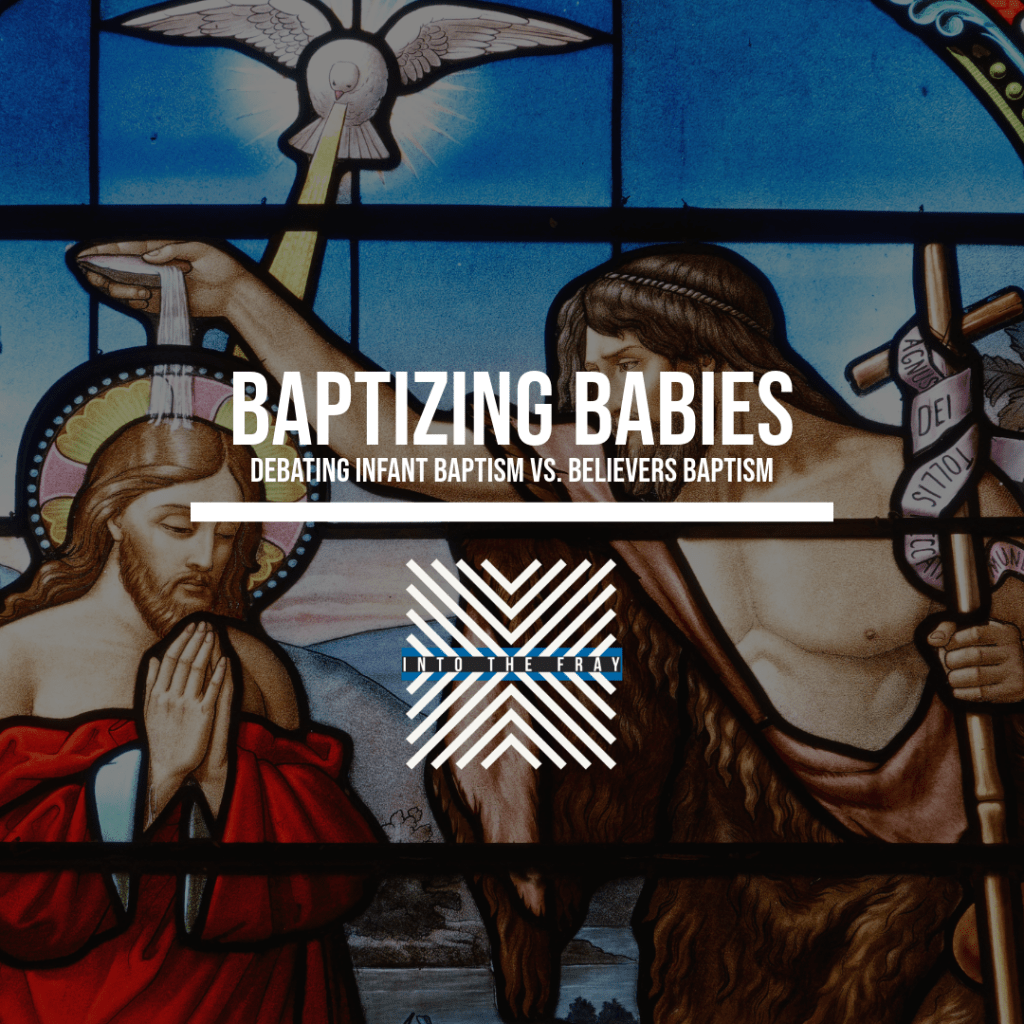
Baptism is a wonderful experience in the life of the Christian. It in short, encapsulates the essence of what it means to identify with Jesus. Baptism is on the lips of every Christian, yet what is meant by baptism is different for many.
For some it means getting sprinkled with water from a bowl, for others it means holding your breath as you get dunked under water. Again for some baptism is what happened to you as a baby before you ever consciously made a choice to follow Jesus and again for others it is the mark of a day where you publicly made it known to everyone in your community that you are redeemed by Christ.
Baptism means different things to different people. All Christians, all in the same family but there is a division.
The Individual Nature of Church Today
I remember watching an old Gospel Coalition roundtable video back in the day of three mega church pastors sitting around talking methodology. As a Theo-bro I loved it. These were the men of the movement. They were changing the landscape of modern evangelicalism. They each pastored thousands of people and it was a sight to see these three come together and have a discussion.
Problem was one of these megachurch pastors named Francis Chan was making a radical shift. Francis was leaving the megachurch world behind. The other two pastors who I will refrain from naming, were doing the opposite. They were creating a multisite church.
A multisite church is one church meeting in multiple locations all under the same banner and specifically in these cases under the same preaching. Now how does a mega church that already has multiple services also meet in multiple places? It’s called live-streaming. Or at least replaying the video of the sermon from the Pastor at different times in these other locations. The benefit of the multisite satellite campuses for these megachurches was they got to continue growing through the same means that they were able to become a mega church to begin with. The same effective, typically charismatic and captivating preaching that made them a success to begin with could be duplicated by playing videos of the preaching in other locations. The brand grew, the church grew, but the leadership did not actually have to grow.
In this video, these other two pastors were at the top of their game(both have since fell dramatically in the morality department) but at the time they were the go to. Francis was as well but these two pastors were not sure about his decision at the time. They questioned him. They acted like he was being selfish. Like he was holding his gift from God and others not allowing it to be used for the advancement of God’s kingdom.
Francis had a different perspective. Francis was troubled by how influential his name was becoming. People were coming to his church but not for the right reason. It became idol worship. His congregation, he feared, were more spectators than members.
As a generalization I would say from a personal perspective, the modern church is hyper individualistic. We livestream services so people can stay home. We split up the family Sunday mornings to make the experience “more convenient.” We focus more on the Sunday experience than on small groups throughout the week. We spend more money on equipment to make the best show not only in person but online so people can watch than we do on resources for the development of our brothers and sisters in the faith actually growing into maturity as believers.
We point our fingers at the world for tearing the family apart, but the reality is we do a good enough job of that within our own faith families. I say this as a Youth Pastor who focuses specifically on teenagers. I do not focus on the development of families growing in their faith, I focus on teenagers growing in their faith. (a Blog for another day)
The point being, we live in a world even within the church where people are isolated from one another. There is no unity in the body. There is no unity in the human race. Social media sure has not helped us in this regard. The more technology infuses with our lives and rituals, the more we become detached from actual experiences with other human beings. Add on that, the more we come to believe that the way we do life, in this individualistic manner, is actually normal and how it’s always been done.
F is For Family
Christianity has a long history of building out the family. At the time of writing this piece I am also preparing for my little girls first birthday party. As I had alone time this morning to journal I reflected on how fast time is moving by. As each birthday party comes and goes, the number continually will go up. That number is like a deadline. Eventually the number will get to a point to where we are closer to my baby girl becoming her own person, an individual in society. The higher that number moves up, the quicker we are to my baby girl moving out, possibly moving across state lines, getting married and having kids, again becoming her own person.
Much of how our modern world views family today is with the lens that the purpose of the family is to break apart and become our own families. Parents increasingly more and more look forward to the day where the kids move out and have less to do with them. Everyone in the family looks forward to the day where everyone is grown up, their own individual self and can make choices only for themselves and not for the others in the family.
Now this is not a bad thing inherently. It is good to be taught how to become independent. My hope for my daughter is that she does not have to call me every time she gets into a crisis. But rather she has the mental fortitude on how to assess the problem that arises and find a solution.
Some of this way of viewing the family as a means to break part though is from a bad reading of Scripture and an imposing modern Western views of family life onto the ancient middle eastern writings of the Old Testament.
This is why a man leaves his father and mother and bonds with his wife, and they become one flesh. (Genesis 2:24 CSB)
For many of us we have read this passage or heard it preached as a way to communicate that boys need to grow up, move out of their parents house and start their own lives with their own families. This cycle will continue with each son continuing the breakdown of the family. This is in a sense like a man starting a business, training up employees in the way they should go about doing business, and then kicking(or in a not so aggressive way, raising up) the employee to get out on their own and start their own company. What then happens when this CEO retires or moves on? Well, they only trained employees to go out and start their own businesses so all that’s left when it comes time for the CEO to depart is for the initial business to shut down. There is no passing the torch, there is no continuing the legacy and building on an already established foundation. There is only closing the doors so that new ones can open. This cycle will also continue.
How we understand family today in our modern world is much the same way. The family starts off with mom and dad raising children, only with the intention that the children go off and separately start their own families with all new traditions and customs. The initial family mom and dad set up will inevitably fade away.
Our Bibles were not written in modern day individualized American society. They were written in ancient Jewish tribes.
Going off could likely get you killed.
Family was vitally important.
(Think about Lot in the story of Genesis.)
When the author of Genesis was writing this line what they had in mind is not what we have in mind. The author’s goal, we know this because of the Jewish customs when it comes to family, was for the son to be raised up, go off and find a wife, and then to bring her back to the family home where they would literally just add another room on to the house. The goal was for the family to grow together not individually. The parents initial goal was to set up a foundation for the children to build on with coming generations.
What this then required of the parents was for the parents to raise their children up understanding the values, traditions, customs and beliefs that the family was built on so that when the time came for the parents to pass the torch, the children were ready. The children would be ready because they were trained for this moment. They not only knew the job, but they knew how to get the job done.
Individualized Faith
We live in such an individualized church culture today that the idea of initiating anyone into the faith through the family is seen as imposing your beliefs on someone else. The problem is that you are then assuming the action of you not teaching your kids your values is you teaching your kids your values.
If you do not share your values with your children that directly communicates your value that you do not believe it is your job to share those values you hold with your children. This is also a problem of assuming you role as parent is to “gently point in the right direction and hope your child catches on to where you are pointing and wants to go that same direction.
Our role as parent is not to gently point our kids in the right direction and hoping for the best. It is to raise them up with a foundation that has already been set. Your child should not be starting from scratch. Your child should have a foundation set so that can then build on it.
When it comes to our faith, the same should be true I believe.
The case for Baptizing Individuals
Now, I am wiring about baptism. The reason many godly, faithful, devout Christians baptize only believers is not because they are intentionally or consciously trying to “break apart the family.” They have valid, strong, compelling reasons why they only baptize those who consciously profess the name of Jesus and believe in Him.
Much of their argument stems from the literal examples all throughout the New Testament where you see people believing in Jesus and then getting baptized.
Our first glimpse of baptism in the New Testament is with the famous John the Baptist(not a denominational title but a description of what he did). It starts off in Matthew 3 with John being this voice in the wilderness preparing the way for Jesus to come. John was essentially the guy with a bullhorn coming before the King made His way through the town. John’s goal was to get everyone aware that the “kingdom of heaven has come near”(v.2). The way people are described as to have responded at John’s fiery preaching was to be “baptized by him in the Jordan River, confessing their sins”(v.6).
But the religious leaders of the day were not the biggest fans of John’s ministry. They kept a close eye on what John was doing and preaching and what’s described next is an encounter they had with John at one of his baptisms. When John sees these religious leaders he immediately goes into offense mode and starts calling them names like “brood of vipers”(v.7). After John’s offensive comments he then explains what his baptism is and what the baptism from the coming King will be.
“I baptize you with water for repentance, but the one who is coming after me is more powerful than I. I am not worthy to remove his sandals. He himself will baptize you with the Holy Spirit and fire.(v.11 CSB)
John admits that his baptism is not powerful. It is a mere sign of repentance. It is a sign displaying the change from dirty to clean, from unwashed to washed that the people are going through. But he alludes to the fact that the one who comes after him(this coming King Jesus) will baptize with the Holy Spirit(God’s Spirit) and fire. Jesus’ baptism according to John is powerful. A change will happen.
For credobaptist(people who baptize only those who profess faith in Jesus) what they believe is that because of the powerful baptism(the change from unwashed spiritually to washed spiritually) a person goes through they then publicly go through John’s baptism with water which points to this inward baptism that a person’s soul goes through.
Baptism(the act of being dunked under the water and raised up) is a public display of the inward change the Holy Spirit has done to you.
The Apostle Paul refers to this demonstration in his letter titled Romans:
What should we say then? Should we continue in sin so that grace may multiply? Absolutely not! How can we who died to sin still live in it? Or are you unaware that all of us who were baptized into Christ Jesus were baptized into his death? Therefore we were buried with him by baptism into death, in order that, just as Christ was raised from the dead by the glory of the Father, so we too may walk in newness of life. For if we have been united with him in the likeness of his death, we will certainly also be in the likeness of his resurrection. For we know that our old self was crucified with him so that the body ruled by sin might be rendered powerless so that we may no longer be enslaved to sin, since a person who has died is freed from sin. Now if we died with Christ, we believe that we will also live with him, because we know that Christ, having been raised from the dead, will not die again. Death no longer rules over him. For the death he died, he died to sin once for all time; but the life he lives, he lives to God. So, you too consider yourselves dead to sin and alive to God in Christ Jesus.(Romans 6:1-12 CSB)
Here Paul is making a direct correlation from our physical being dunked in the water baptism to the baptism that goes on inside of us. Baptism is a sign where we publicly show our allegiance to Jesus by standing like he did on the cross in front of a crowd, dying to our self as he died for us, being buried(dunked under the water) as the old version of us has passed away, and then being raised to newness of life as Jesus was also raised. This is a beautiful depiction of what Jesus has done for us that we get to participate in when we publicly profess our faith.
For many this is the moment in their life they get to look back on and remember what Jesus has done for them.
Cornelius
In Acts 10 we are told of this time in a Centurion’s life where he was awakened to what God has done through Jesus and what we are told initially of this man is that he is a centurion, meaning he was a gentile solider of the Italian Regiment. But also we are told that he was a “devout man and feared God along with his whole household”(v.2) We know he was a devout man because he bore fruit which something John the Baptist pointed out that the religious leaders were failing in. This centurion named Cornelius “did many charitable deeds for the Jewish people and always prayed to God”(v.2). This is striking because he is a gentile who believed in Yahweh and showed this by serving God’s chosen people: the Jews.
One day though, Cornelius was visited by an angel of the Lord and was told that his acts of charity had came up before God as a memorial offering and because of this Cornelius must send men to Joppa and have them send word to Peter to come. Peter at this same time is also having visions. His visions are God making the point to Peter that what was once uncleaned God has now made clean. And Peter needs to get on board with this.
As Peter is “perplexed” about his vision the men Cornelius sent arrive at Peter’s doorstep and the Spirit tells Peter to “go downstairs, and go with them”(v.20).
Peter leaves Joppa and goes to Cornelius’ house where they exchange the details of what they have seen. The good news is then preached by Peter to the Gentiles around Cornelius and the Holy Spirit comes down. We are told it was so evident the Spirit had descended on these Gentiles that they started “speaking in tongues and declaring the greatness of God”(v.46). Peter then baptizes these Gentile believers. This shift is massive. Now the storyline of the Bible makes sense. God chose Israel not because of anything good they had done, but because he wanted to bring redemption and restoration to the world, and so he chose a small, insignificant tribe of people to start ushering in this new world. These chosen people were chosen to be blessing to the nations and the way they would be a blessing is by sharing the goodness of God with the world. Here we start to see that goodness leap over borderlines and the change start taking place among outsiders.
This is a beautiful depiction of people far from God, publicly professing belief in Jesus and being baptized.
The Case for Infant Baptism
The problem with this view is that it does not take into account the covenant relationship God has with His people collectively. We are so used to viewing faith as a personal expression of ones own relationship with the divine that we forget or completely dismiss the idea that God does not just call individuals to follow Him but he also calls groups, tribes, nations, entire people groups to follow Him.
For example when we look back at Father Abraham his initial call from Yahweh was not just an individual call but a covenant that involved people from his line.
Go from your land,
your relatives,
and your father’s house
to the land that I will show you.
I will make you into a great nation,
I will bless you,
I will make your name great,
and you will be a blessing.
I will bless those who bless you,
I will curse anyone who treats you with contempt,
and all the peoples on earth
will be blessed through you.(Genesis 12:1-3 CSB)
This promise made to Abraham is one that implies God is going to use his family to be a blessing to the nations. It is a covenant that is made with Abraham’s lineage in mind. Abraham is not the only person God will partner with and use, but its Abraham’s sons(who are not even born yet) too.
So what does this mean though? Does this mean God is forcing a relationship with Himself onto Abraham’s sons before they even have breath?
Absolutely not. God has always been inviting us to be partners with him ever since the beginning of creation. And here after the aftermath of the fall, we see God partnering with Abraham and his future family to begin this reconstruction project. This restoration project that will bless the whole world that has been affected by the fall.
As families who follow Jesus, we are also called to do this. As parents we are called to partner with God in bringing about redemption and restoration to the world and we do so by building families that are teams designed to help restore what was broken.
Where some families are built and they repeat the cycle of destruction and chaos that comes from the fall; we as Christians are called to build families that break that cycle and start a new cycle of hope and restorative work.
What does this look like to start a family who is built on this partnership with God?
Well, in the Old Testament, Abraham was given a sign to display as being a partner of God. This sign was circumcision.
When Abram was ninety-nine years old, the Lord appeared to him, saying, “I am God Almighty. Live in my presence and be blameless. I will set up my covenant between me and you, and I will multiply you greatly.”
Then Abram fell facedown and God spoke with him: “As for me, here is my covenant with you: You will become the father of many nations. Your name will no longer be Abram; your name will be Abraham, for I will make you the father of many nations. I will make you extremely fruitful and will make nations and kings come from you. I will confirm my covenant that is between me and you and your future offspring throughout their generations. It is a permanent covenant to be your God and the God of your offspring after you. And to you and your future offspring I will give the land where you are residing—all the land of Canaan—as a permanent possession, and I will be their God.”
God also said to Abraham, “As for you, you and your offspring after you throughout their generations are to keep my covenant. This is my covenant between me and you and your offspring after you, which you are to keep: Every one of your males must be circumcised. You must circumcise the flesh of your foreskin to serve as a sign of the covenant between me and you. Throughout your generations, every male among you is to be circumcised at eight days old—every male born in your household or purchased from any foreigner and not your offspring. Whether born in your household or purchased, he must be circumcised. My covenant will be marked in your flesh as a permanent covenant. If any male is not circumcised in the flesh of his foreskin, that man will be cut off from his people; he has broken my covenant.”(Genesis 17:1-14 CSB)
There is a lot of covenant language in this passage but the detail I want to point out is that the sign of this covenant is for the sons to be circumcised on the eighth day. This sign is supposed to be performed on every male that comes from Abrahams line. And it is sign pointing back to this covenant God is making with Abraham.
What’s interesting is that everyone in Abraham’s household who was male received this sign.
So Abraham took his son Ishmael and those born in his household or purchased—every male among the members of Abraham’s household—and he circumcised the flesh of their foreskin on that very day, just as God had said to him. Abraham was ninety-nine years old when the flesh of his foreskin was circumcised, and his son Ishmael was thirteen years old when the flesh of his foreskin was circumcised. On that very day Abraham and his son Ishmael were circumcised. And all the men of his household—whether born in his household or purchased from a foreigner—were circumcised with him.(Genesis 17:23-27 CSB)
This is important for us because the way God invites Abraham into this partnership, Abraham is then inviting all the other males in his household, even is his illegitimate son, to be apart of this partnership. Abraham is leading the way for his family in their relationship with God. His relationship with God does not just stay to himself but extends to the entire family, as the entire household falls in line.
What would that be like for us today? If our faith was not merely a personal expression that we as an individual make but rather a covenant with God to partner with Him and that we make and invite our families to be apart of?
The belief for Padeo baptist(people who baptize infants) is not that baptism saves them(which ironically is a claim credo baptists will make). It is not a “dunking and hoping for the best.” It is an invitation, a way of living life that pulls the children into what God is doing amongst the parents. It is familial.
I believe much of our modern way of viewing salvation is so black and white that we get lost in trying to make sure it’s this big magical spectacle that everyone can look in on. We have to remember the day we got baptized and get a certificate and our story around baptism has got be dramatic. We were a drunkard or a dead beat and now we are sober and present. There has to be be dramatic and radical overnight change in behavior. You have to be one way one day and another way the next.
I believe what covenant theologians are getting at with their view of salvation is more so that it’s this journey we embark on with God. It looks more like the story of Abraham than the story of Saul. Abraham did not change overnight. But he is was in a covenant relationship with Yahweh. And overtime Abraham was sanctified. But to be fair, I believe even Saul had more sanctification happening behind the scenes than we like to admit when we recall his story. There was a time when Saul was quiet. He was learning. Salvation does not happen overnight for many of us. And as parents who are baptizing their children before the child professes faith, it is more of a sign that this family is raising this child in the way of the Lord. Everything about this childs upbringing will be different. They will know their God from womb to tomb because their parents will keep it on their doorposts.
“Listen, Israel: The Lord our God, the Lord is one. Love the Lord your God with all your heart, with all your soul, and with all your strength. These words that I am giving you today are to be in your heart. Repeat them to your children. Talk about them when you sit in your house and when you walk along the road, when you lie down and when you get up. Bind them as a sign on your hand and let them be a symbol on your forehead. Write them on the doorposts of your house and on your city gates. (Deuteronomy 6:4-9 CSB)
I know this still does not settle the connection this sign has with Baptism though.
What is Baptism?
Scott McKnight writes in his book ‘It Takes a Church to Baptize’ that baptism is a “sign, seal, symbol, and seed.”
- Baptism as a sign: With Abraham we see that circumcision was a sign, it set the people of God apart from the Gentiles who did not know or partner with God. Baptism likewise is our sign today of a partnership with God. Just as circumcision is this sign all of Abraham’s household receives because of the convenant God made with the leader of the household of Abraham; so baptism is a sign our household can received based on the covenant we have made as parents with God. Scott refers to the Anglican Thirty Nine Articles of religion that calls a “sign” a “mark of difference.” The same way baptism for an individual who professes faith in Jesus is a sign publicly that they identify differently than the rest of the world, so too is baptizing our children as infants. It is a sign that they are being raised to identify with Jesus in his death, burial and resurrection.
- Baptism as a seal: Paul in Romans 14:11-12 says: “And he(Abraham) received the sign of circumcision as a seal of the righteousness that he had by faith while still uncircumcised. This was to make him the father of all who believe but are not circumcised, so that righteousness may be credited to them also. And he became the father of the circumcised, who are not only circumcised but who also follow in the footsteps of the faith our father Abraham had while he was still uncircumcised.” We are told in Ephesians that the Holy Spirit is our seal of approval by God. Baptism is a seal of approval by God that this child is sealed with the love of God before they even understand what faith is. They are being grafted in. Scott says: “Baptism is a visible word of God’s grace and love for us. As a seal, it confirms the redemptive love of God on the child. That child who journeys into faith and is confirmed at confirmation puts a seal on the journey as he or she intentionally believes and enters into the faith of that baptism.”
- Baptism as a symbol: Baptism for this child is a symbol like it is for a professing believer that they are loved by God and entering into this covenant relationship with God.
- Baptism as sacarment: Sacraments are holy rituals that we do as believers that point to what Jesus has done for us. Scott McKnight says: “It is a rite, with created matter(water, bread, wine) and words that point us to God, and through that process sacraments become for us a means of grace.”
- Baptism as seed: We have already discussed salvation is often not overnight. There was a clear moment in my heart and mind where I decided to follow Jesus, but there was at least a year or so before that where God was already awakening me. Likewise for infant baptism, baptism is a seed where that child is being converted to the way of Jesus from the moment they are baptized. This seed is planted at baptism, and over the course of their lives they will be treated as a disciple(student) of Jesus learning how to follow Him in the way He chose to live.
Is There Any Evidence of Babies Being Baptized?
Before I highlight a few passages, let me say a quick thought about how we tend to read the Bible these days. Nothing irritates me more than people who do not regularly read literature acting like they are experts in how to read one of the most complicated, nuanced collection of books of all time: the Bible. The Bible is a difficult book to understand. You have to be a good reader to really get to the root of what it is saying. That does not mean your Bible App’s verse of the day cannot speak to you, but so can an obscure quote from Harry Potter or the Stoics.
There is much said about reading your Bible often in evangelical circles. Quiet time is a must. But when it comes to reading the Bible in context of when it was written; understanding how people of the ancient world thought back then compared to now. This is crucial for understanding the Bible does not spell things out the way we would like.
We often read the Bible as Christians the same way we make movies. We make the point way too obvious. There is no subtlety, there is no mystery, there is no room for debate about what that means. People know our movies are Christian because they in very corny straightforward way tell you “this is a christian movie.” We often read the Bible believing it communicates the same way modern evangelicals create.
The Bible is not bad art though. It is perhaps the best art ever created. And it’s message is often subtle, a mystery to be discovered. This requires effort. You cannot just pick up your Bible read it and immediately understand all that the author wanted you to get from the passage. Rather, you have to do some deep work. You have to understand a little bit about how Greek and Hebrew as languages work. You have to understand how to read a passage in context, and not just context in that you’re not pulling one verse out of the book of John and isolating it away from its surrounding passage but you have to also understand context when it comes to the cultures, stories, and peoples of its time in order to understand how the words being communicated on the page would have hit home for those reading(or hearing) it for the first time.
So, where was baptizing babies at in the Bible?
“Can anyone withhold water and prevent these people from being baptized, who have received the Holy Spirit just as we have?” He commanded them to be baptized in the name of Jesus Christ.Then they asked him to stay for a few days.(Acts 10:47-48 CSB)
Here we have the story we mentioned earlier of Cornelius and Peter. When it comes time for a baptism to take place, the language that is used becomes plural. The only person mentioned before this is Cornelius. He is the one the vision came to and he is the one Peter was sent to, yet what is going on in Cornelius heart and mind extends to his family and to his household. But this requires us to hone in on the use of language being used. It is noticing that there is a shift from the solo Cornelius to “these people.”
On the Sabbath day we went outside the city gate by the river, where we expected to find a place of prayer. We sat down and spoke to the women gathered there. A God-fearing woman named Lydia, a dealer in purple cloth from the city of Thyatira, was listening. The Lord opened her heart to respond to what Paul was saying. After she and her household were baptized, she urged us, “If you consider me a believer in the Lord, come and stay at my house.” And she persuaded us.(Acts 16:13-15 CSB)
Take note of two things here: 1.) The Lord opened Lydia’s heart and at opening her heart then what followed was her whole household was baptized. We put so much emphasis on “are you saved?” But the Bible keeps answering this question “are they baptized?” This does not mean baptism means you are saved. But it is an emphasis that these people viewed baptism more as “beginning of a new journey moment.” 2.) Lydia after her and her household are baptized says “if you consider me a believer” implying that maybe she was baptized and Paul did not actually believe she was “saved.” This is just an interesting piece to point out that just because people were baptized does not mean you were believed to be a believer. Maybe baptism is one of the those firsts acts of obedience on a long road to following Jesus and being “saved.”
The next passage I want to point out is the one we found in the story shortly after this one where Paul and Silas are in prison, a giant earthquake breaks open the prison and the jailer goes to kill himself because of fear the prisoners had escaped and he would be held responsible.
The jailer called for lights, rushed in, and fell down trembling before Paul and Silas. He escorted them out and said, “Sirs, what must I do to be saved?”
They said, “Believe in the Lord Jesus, and you will be saved—you and your household.” And they spoke the word of the Lord to him along with everyone in his house. He took them the same hour of the night and washed their wounds. Right away he and all his family were baptized. He brought them into his house, set a meal before them, and rejoiced because he had come to believe in God with his entire household. (Acts 16:30-34 CSB)
Here we must take notice there is a pattern of individuals responding to the message they have heard and their response being that their entire household be baptized.
What is interesting is the two objections we have to the infant baptism argument.
Two Objections to Infant Baptism
1.) It says the household was baptized not babies: This objection is the more obvious one and the one I would fall back on continually. Yet this is why I made the point earlier that often when we read the Bible, because we are not readers to begin with, we often approach the Bible wanting things to be spelled out very clearly. We want to see the words “Jesus baptized a baby.” But that is not how good literature works. Rather it says the household which would imply there are kids and likely some babies involved. I know this is not a strong argument but it is a fair argument to make and is worth considering.
2.)Obviously the household has professed faith: It is interesting me the people who make the first objection are wanting to read the Bible very literally and reject infant baptism because they do not see in Scripture where the Bible says “a baby was baptized.” Yet when given pushback on the household being baptized they make the assumption the people in that household all felt the Spirit and were saved and professed a faith. Yet there is no clear indication of that. Like with Cornelius, we are only told about Cornelius relationship with Yahweh not with the rest of his household, yet they too were baptized.
Where Do I Stand?
When I think about the gospel, the good news of our salvation I think a lot about grace. I did not earn my salvation. As the famous John Owen line says “I contribute nothing to salvation except the sin that made it necessary.”
As a parent part of my job is to help communicate this grace to my child. The struggle with our particular situation is that my child is a Pastor’s kid. She will be raised in an environment where she will likely know all the right answers and she will likely find it hard to have this big radical shift in her life from her “old ways” to her new ways. That being because as parents me and my wife are being very intentional about how we raise her in the way of the Lord. We want her to know from the jump that the Gregory’s live life differently than the rest of the world and it is because we are followers of Jesus. Following Jesus means we have adopted a lifestyle that runs contrary to the ways of the world.
Yet we want to set this grace before her continually over the course of her life. As a youth Pastor I refuse to use scare tactics and fear mongering to get the students to “fall in love with Jesus.” I teach on hell and God’s wrath but not in a way that is positioning those two subjects in a manner to scare the kids into heaven. Rather I approach Youth ministry genuinely wanting to prop up grace and God’s loving invitation to all of us in such a way that our students are not running away from hell when they profess faith but are rather running into the loving arms of Jesus.
For my daughter I want to see her running into the arms of Jesus. How I want to raise her is. very specifically in the way(lifestyle) of Jesus. All of her life I pray is marked by Jesus. One of the ways I believe you can mark your child in the way of Jesus is by baptizing them.
R.C. Sproul in his book ‘The Essential Truths of the Christian Faith’ says on the connection between circumcision and baptism:
Both are signs of the covenant and both are signs of faith. In the case of Abraham, he came to faith as an adult. He made a profession of faith before he was circumcised. He had faith before he received that sign of faith. Abraham’s son Isaac, on the other hand, received the sign of his faith before he had the faith that the sign signified(as was the case with all future children of the covenant).
Circumcision was a sign of God’s covenant with His people. It was a sign of faith. Abraham is our example of someone who professes faith and then takes on the sign of their faith after their profession. And his son Isaac is a symbol for us of someone who received the sign of faith before they ever could acknowledge what faith even was. Abraham though was raising his child in the faith which means he was raising Isaac in a manner that was building Isaac’s life in full dependence and trust on Yahweh.
Baptism does not save. So for one, I do not believe this is a divisive issue on which to divide the church over. When we argue about baptism we are not arguing over a false gospel on whether people get saved or not by the act of baptism. Neither credo or paleo baptists believe such a thing. Both believe baptism is a sign of faith. One just believes it should come after a profession of faith and one believes it can come before a profession of faith.
I personally believe it’s both.
The question I know people may have is “well, what does it communicate to the child who is baptized? Does it give them false assurance?”
When done rightly it should not. The same way my baptism(I was baptized around 14 years old) does not give me false assurance. I know baptism was a sign of faith not the cause of my faith. My child likewise, if we were to baptize her as an infant would not look back at her baptism as the cause of her faith but rather a marker that her family has raised her in the faith from the beginning.
In my tradition, Anglicanism, we baptize infants. before they cognitively understand the story of Christ, before they can affirm a creed, before they can sit up, use the bathroom, or contribute significantly to the work of the church, grace is spoken over them and they are accepted as part of us. They are counted as God’s people before they have anything to show for themselves.”
Tish Harrison Warren(Liturgy of the Ordinary)
What this quote from Tish makes me think of is the practice that I know some churches follow which is the act of making this person who wants to get baptized go through a class. Now I understand why some churches practice this. It is because they see the overly inflated numbers of baptism at church and yet the lack of true followers of Jesus showing up week in and week out. And they diagnosed the problem as churches not communicating what baptism truly is and how to embark on this next journey of their lives with Jesus. So these churches put a plan in place to properly prepare and make sure the people they are baptizing understand what they are doing. And in some cases this class is more like a test. If you really want to publicly profess faith, then show up to class.
Where I will play devil’s advocate is that no where in Scripture do you see Paul making new believers go through a class in order to make sure people are doing this for the right reasons. And in some cases it can feel like “oh I have to work through this class” by reading whatever Theo-bro books the pastor wants me to read by the Puritans and answer the questions the right way and attend so many weeks before I can get baptized. Which can in a negative sense make the person feel like they have to earn their baptism. Now, this is hypothetical. I do not run in these church environments. I have only heard good cases of how these classes go but there is a part of me that thinks “what are you communicating to your people when you make them go through these extensive classes in order to be baptized?” Are you unintentionally communicating that you have to earn your baptism? That would be unbiblical. My point with all this is to say both sides have ditches they can fall in that communicate the wrong truths. It would be arrogant to not acknowledge the faults of your own side while pointing out the faults in the other.
For churches who practice infant baptism I have met a few people who were baptized as babies and do not understand their baptism in the slightest. It made me coming to the position I have of being for infant baptism very difficult because I would grab coffee with these people and ask about why they believe what they believe and why they were baptized the way they were and all they contributed to the conversation was a blank stare.
It’s Complicated
It is less about that child’s faith and more about pledging that child to a new-creation life through Christ’ death and resurrection.
Scott McKnight(It Takes a Church to Baptize)
Me and my wife both separately believe in infant baptism. We have different reasons and we came to this position separately. She was for it before I was. I told her the other day it’s so annoying that she can come to believe things easier than me. She wakes up believing in infant baptism. I on the other hand order 20 books, takes a few years to go back and forth debating myself and then start writing out my thoughts in to a blog no one will read in order to come to the position I hold. Her way sounds less torturous.
We believe that children of parents in the faith should be baptized because it is a sign marking the family of faith. Me and Berlin were baptized after our professions of faith and we would like to baptize our baby girl as a baby in line with the faith she is being raised up in.
The problem with this position we hold is that I work as a Youth pastor at a Southern Baptist Church. Our church does not practice this part of our faith. I am a strong believer in the unity of the body. I love debating theology and getting into the nuances of different positions. I believe its good for you to have stance on certain positions but I do not believe you should let them be dividing issues with the body.
I need my church not because they saved me but because they are my family. Regardless of where we disagree. Me serving as the Youth pastor has meant I have got to baptize a few of our teens who professed a faith and followed that up with baptism. My position theologically does not sabotage the work God has called me to do at my local church. In fact, no one probably besides our family has the slightest inclination that I believe differently on this issue.
That’s because it’s a personal family issue that would not affect anyone else’s convictions at our church. We practice Sabbath every week and that does not inflict on our churches stance that you do not have to practice Sabbath.
As of right now, we have not baptized our baby girl. Me and my wife have never been apart of a church that believes in that practice. We have no idea how that would even look. Every now and then I think about just doing it at home but I do not want to cause division or confusion within our own church family. Which means, this is a complicated issue for me and my family. But the point must remain, me holding to this position is not out of tradition as many would point too. It is not out a mere “hoping for the best”. The genuine position of infant baptism is one of walking in line with the call to the parents to raise their child up in the way of the Lord. Marking them for the day of redemption.
How to Raise Your Child in the Way
The way. What a beautiful way to describe the practice of following Jesus.
John Mark Comer in his book culminating the last few years of his work says:
Contrary to what many assume, Jesus did not invite people to convert to Christianity. He didn’t even call people to become Christians; he invited people to apprentice under him into a whole new way of living. To be transformed.
Transformation is possible if we are willing to arrange our lives around the practices, rhythms, and truths that Jesus himself did, which will open our lives to God’s power to change. Said another way, we can be transformed if we are willing to apprentice ourselves to Jesus.
As for me and my wife, we have been apprentices of Jesus for a few years now. We both experienced this conversion like moment with Jesus where we surrendered to His will for our lives and abandoned our own way of living.
seperateFollowing Jesus is different than just merely “being saved”. Now I know there is a lot of debate and teaching about the difference between Jesus as Savior and Lord and whether those two can be seperated. But if you will entertain my train of thought for a moment hopefully you will see why I want to separate the two in order to explain where me and my wife come from and why we are choosing an alternate path in following Jesus.
Me and my wife both experienced Jesus as Savior for our lives. We are were both down and out, broken, confused, helpless. And Jesus came into the burning building of our lives and saved us from death, destruction, hell and the grave.
We both though after being saved experienced along the way the churches inability to properly help people adapt to the way of Jesus and abandon their own lifestyle, trauma, upbgriningings that run contrary to the way of Jesus.
We felt much of the way churches we had been apart of were structured were by way of getting you saved but then allowing you to live as the world does just with a “I Love Jesus” shirt on.
The way of Jesus is a way of living. There are many ways of living the world has to offer, but we believe Jesus’ way is the best way. It requires time and attention to detail on everything from how our brains work and rewriting that code to changing our daily rhythms in order to keep communion with God and others a priority.
So we raise our child(currently) inviting her to practice the lifestyle of Jesus in her day to day. She practices Sabbath before she understands it. She prays before she can utter a word. She worships even though she thinks it’s just another dance party.
The reason why is because for many of us in the church we fail to understand the process people go through in order to actually experience real change.
Salvation is not and was never an overnight change. Rather it was a continual journey walking out of the wilderness and into greener pastures.
The way we are raising our daughter is through that process. We believe she is born a sinner. She has a broken heart(she desires wrongly), she has a broken mind(she think and believes wrongly) and she has broken hands(she does and acts wrongly). And so the way we present the gospel to her is by a continual invitation to come be apart of what God is doing in and through her parent’s lives as we aim to follow Jesus in the day to day. We believe she will experience God through these invitations because God is already there with us when we are doing them as her parents.
To end maybe my longest blog post yet. We aim to practice the Shema and invite our children to participate in the lifestyle of Jesus by this set up:
The Lord our God, the Lord is one. Love the Lord your God with all your heart, with all your soul, and with all your strength. These words that I am giving you today are to be in your heart. Repeat them to your children. Talk about them when you sit in your house and when you walk along the road, when you lie down and when you get up. Bind them as a sign on your hand and let them be a symbol on your forehead. Write them on the doorposts of your house and on your city gates. (Deuteronomy 6:4-9 CSB)

Leave a comment